Before buying lift kits and truck accessories in Reading, choose between a leveling kit and a complete suspension lift. A leveling upgrade corrects factory rake while preserving daily manners, and a suspension lift adds clearance, wheel travel, and bigger tire options. Collect precise year, trim, drivetrain, and suspension specs to confirm Rough Country fit. explore here Plan for tires, alignment, and accessories like steps, lights, or liners—you'll understand how the right setup comes together.
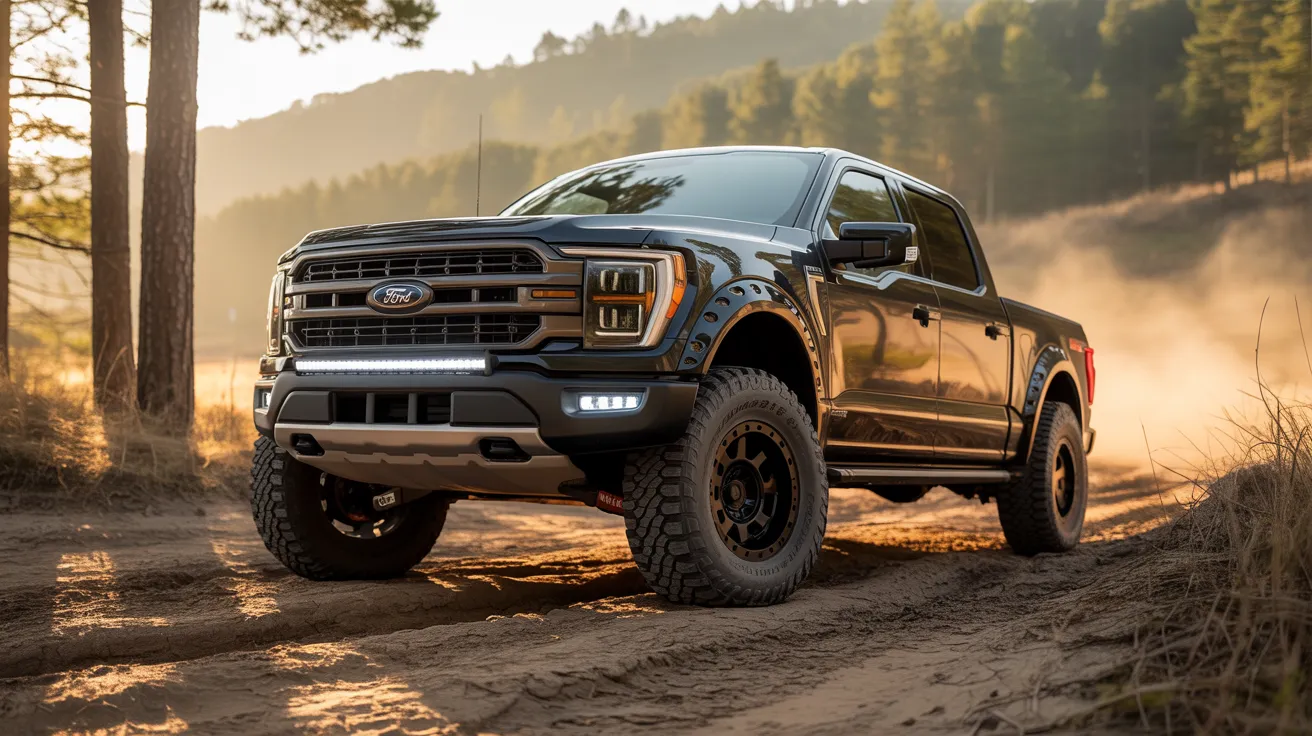
Key Takeaways
- Choose a leveling kit to remove factory rake while keeping near-stock performance and fitting slightly larger tires for daily driving.
- Choose a suspension lift for increased ground clearance, wheel travel, and off-road performance, understanding that steering response may differ.
- Validate exact fitment using your truck's year, model, make, drivetrain, trim, cab, bed, and suspension type prior to placing your Rough Country parts.
- Align lift height and shock choice with your use, covering commuting, trail use, towing, or intensive off-road driving.
- Reserve money for beyond the kit price alone, with costs for alignment, labor, wheels, tires, shocks, and supporting accessories like steps, lights, and liners.
Suspension Lift Kits vs Leveling Kits
While both modifications change your truck's stance, suspension lift kits and leveling kits solve different problems and deliver different outcomes. A leveling upgrade usually raises the front to match the rear, correcting factory rake with minimal change to geometry, ride height, and daily drivability. You use one when you want a cleaner profile and room for bigger tires.
A suspension lift kit elevates the entire truck and changes critical parts to deliver increased clearance and wheel travel. You'll observe larger improvements in ride height, off-road capability, and tire fitment, but you should plan for handling tradeoffs, steering changes, and a higher center of gravity. If you desire subtle visual changes, go with a leveling kit. If you require true clearance and suspension articulation, lift it and organize the supporting modifications around your use case.
What Rough Country lift kit is right for your truck?
Kick off by recording your truck's year, manufacturer, and model, powertrain, and usage goals, as Rough Country builds lift kits for exact structural design and performance standards. This information shows you which structural parts and hardware will install without spacing or alignment conflicts.
Then examine OEM ride height, cab layout and bed setup, axle configuration, and whether your truck uses 2WD, 4WD, or adaptive suspension. Rough Country fitment guides streamline this process, although you have to validate fitment accuracy against trim-specific components and factory package differences. A kit made for a Silverado 1500 may not fit a Trail Boss, and a Ram running air-based suspension needs different modifications versus a coil-spring vehicle. By verifying fitment first, you prevent fitment surprises, compatibility issues, and return delays.
What Rough Country lift kit suits your driving preferences?
Pair the kit with your driving style, and you'll receive enhanced ride quality, reliability, and additional tire clearance without paying for unused capability. If your truck spends most days commuting, pick a light leveling kit from Rough Country or a suspension lift of 2 to 3.5 inches optimized for daily comfort and predictable steering behavior.
When you divide time between road and off-road use, upgrade to a suspension lift with improved shocks and optimized control arm positioning. You'll achieve enhanced off-road performance, enhanced articulation, and room for larger tires without taxing OEM components. For heavy trail driving, select elevated struts, N3 or Vertex dampers, and lifts that maintain driveline geometry during compression. The right Rough Country package should match load, speed, terrain, and how much ride firmness you'll actually tolerate.
Premium Rough Country Truck Accessories
Round out your new lift system using Rough Country upgrades that tackle the real problem areas you'll see once you lift it and add bigger tires. Start with new running boards or side sliders, which restore ease of cabin entry and provide lower-vehicle protection when your truck sits higher and wider.
Next, emphasize sight lines and handling. Rough Country light systems increase usable sightlines on dim trails, jobsites, and remote roads without complex setup. Interior covers and floor liners keep safe the interior from mud, gravel, and water you'll carry in after off-roading. Fender flares limit mud spray and complement the wider look provided by larger rubber. For hauling and rescue use, heavy-duty hitches, tow hooks, and bumpers that support winches contribute utility without impacting compatibility. Choose accessories that match your lifted truck's dimensions and workload.
How Much Budget Do You Need for Your Build?
After you've chosen the lift kit and supporting accessories, create a budget exceeding the listed kit price. You'll require money for shocks, wheel rims, tires, wheel alignment, labor, and any drivetrain or steering corrections your platform requires. Company reputation is important here; luxury kits tend to deliver better precision, better ride quality, and less installation difficulty.
For realistic budget ranges, plan for entry-level spacer or leveling setups to start at the bottom, while full suspension systems with control arms, tuned dampers, and larger tires climb quickly. Install difficulty, shop rates, and alignment calibration can add significantly. You should also budget for additional upgrades such as gear modifications, brake parts, and recovery equipment if you plan to use it off-road. If budget is a concern, evaluate payment plans carefully and prioritize reliability over showy accessories.
Popular Questions About Lifts
Do Lift Kits Impact Factory Warranty?
Yes, suspension kits can affect your factory warranty coverage, however they won't automatically cancel it. You encounter warranty issues should the manufacturer demonstrates the lift modification brought about or contributed to a defect. Powertrain, steering, suspension, and drivetrain claims often trigger dealer conflicts. You should keep install paperwork, use quality components, and follow service intervals. This enables you to challenge denied warranties and safeguard warranty when the modification isn't at fault.
Does Going Bigger Require Gear Changes?
Yes—if you move up several tire sizes, you'll often require re-gearing. As an example, if you switch from 31-inch to 35-inch tires, your truck can feel sluggish, shift erratically, and create drivetrain strain under load. Changing gears brings back effective gear ratios, helping you recover power, towing capability, and shift quality. You may not require gearing for a minor upsizing, but if power, fuel economy, or shift quality drop, it's normally the right choice.
How Frequently Should You Inspect Lift Parts?
You need to examine lift kit components after the first 500 miles, then at every oil change or 3,000 to 5,000 miles, based on your usage. Regular maintenance checks enable you to catch bushing wear, shock leaks, bracket damage, and alignment issues ahead of time. Verify fastener tightness after hard off-road runs, towing, or impacts. If you drive in mud, salt, or rough terrain often, shorten intervals and examine steering and suspension parts at faster intervals.
Does a lift kit alter towing or payload capacity?
Yes, a suspension system can shift your vehicle's towing and payload specifications. When you raise ride height for more ground clearance, you alter suspension geometry, balance point, and component leverage. That can lower stability under load and increase drivetrain stress, mainly with larger tires. You should respect your manufacturer's ratings unless an factory-engineered kit formally documents revised capacities. Right alignment, gear selection, and braking operation are significant too.
Are Alignment Services Needed Once You Install vehicle modifications?
Yes—if accessories alter ride elevation, suspension geometry, steering angles, or tire width, you should get an alignment service. You'll feel the theory fast: slight changes can pull your truck off-center, scrub tread, and worsen handling characteristics. A full alignment restores camber setting, caster setting, and toe to spec. After particular upgrades, you could also benefit from brake recalibration for driver aid precision. You protect tire durability, steering sharpness, and real-world safety by performing alignment checks promptly.
Final Thoughts
Picking the best suspension system and upgrades comes down to your vehicle's purpose, what stance you want, and what your budget can handle. When you connect a Rough Country lift kit alongside your driving preferences, you'll gain performance, clearance, and looks which synchronize as smoothly as a fine-tuned transmission. Incorporate intelligent add-ons, plan your spend carefully, and you'll build a truck proving functional for daily use, capable off it, and positioned for upcoming challenges.